

 Facebook
 X
X
 Pinterest
 Copy Link
As a holistic realtor, I focus on sustainability and futuristic building practices– Buildings play a vital role in shaping and framing our livelihoods, society, and environment that we live, work, and interact within. I focus on the transition to a low-carbon, resilient, and sustainable society– naturally, sustainable homes will play a dominant role in that.
A sustainable home is one that is built in a way that respects earth’s resources, optimizes energy and water use. They use low-impact, high-performance materials so that they last longer and waste less.
The best part about it? Done the right way, it’s cheaper than conventional construction.
I don’t believe in planning for the future using past tactics. So it only makes sense if ANYONE is going to be building anything new… it should be sustainable.
But you don’t have to start from scratch to be sustainable– throughout this blog, I am going to give you 8 TIPS to turn your home into one that is more energy efficient and sustainable 🙂
TIP #1: Energy Efficient Appliances
DID YOU KNOW, according to the EIA, that 51% of a household’s annual energy consumption is just for two energy end uses: space heating and air conditioning.
Water heating, lighting, and refrigeration account for 27% of total annual home energy use, and the remaining share of home energy is used for devices such as television, cooking appliances, clothes washers and dryers, as well as the growing list of consumer electronics (computers, tablets, phones, video game consoles, and internet streaming devices).
If you think about it, appliances have 2 separate prices– cost of buying, and the cost of operating. If you spend money on high-quality, energy efficient appliances on the front end, you dramatically cut cost on the back end.
Spend a little extra on energy-efficient appliances when possible. And if you’re not using it… turn it off or unplug it.
TIP #2: Replace bulbs with LEDs
How many lightbulbs do YOU have in YOUR house? In our house, we have 52. “While the average for all homes is 67 lights, the average for single family homes is 85 lights, for multi-family homes is 25 lights, and for mobile homes is 38 lights.”
DID YOU KNOW:
– Many traditional lighting sources like incandescent bulbs turn more than 90% of the energy they use to heat, allocating only 10% of energy to actual light production.
– LED bulbs emit almost NO HEAT– so they use more than 75% LESS ENERGY than incandescent lighting.
– LED bulbs have an extended lifespan. The most enduring LED lights have been tested to last as long as 100,000 hours! Thats 100x more than traditional bulbs!!!
Yes, I know they might cost a little more on the front end, BUT if you replaced all your lights with LEDs, that could result in savings of AT LEAST $400 a year on energy costs.
That, alone, makes up for the slightly higher upfront cost.
HOW TO DISPOSE YOUR BULBS:
Don’t throw them away! You should always recycle bulbs, partly for safety – CFL bulbs contain mercury vapor that could be released into the atmosphere and stormwater runoff if the bulb breaks in a landfill – and partly for efficiency. Parts of the bulb can be reused. Gather your bulbs carefully and bring them to your local hazardous waste center.
LEDs don’t contain mercury and so legally can be thrown in the trash, but it’s still better to recycle them. See their positive environmental impact through to the end!
TIP #3 – Insulation
DID YOU KNOW that according to the EPA, the average homeowner can save 15%-25% on heating and cooling costs (11% of total energy costs) by simply adding insulation?!
Without insulation, your home is constantly leaking energy.
Some of the BENEFITS of insulation:
– Keeps your house COOL in summer and WARM in winter
– REDUCE use of cooling and heating systems
– REDUCES energy consumption
– REDUCES energy bill/SAVES money
– REDUCES greenhouse gas emissions
– can make your house more SOUNDPROOF
WHAT INSULATION SHOULD YOU USE?
Hands-down… HEMP INSULATION
Hemp insulation is a composite material but one that is very ECO-FRIENDLY. Instead of consisting of 51% plant fibers and 49% plastics and chemicals, hemp insulation contains as much as 92% hemp and about 8% polyester fibers. Non-toxic bonding agents and fire treatment make up the rest of the composite.
When building or renovating your home, make sure to take the time to insulate using a sustainable material such as HEMP INSULATION… it’s simple and saves you money in the long run… so why not do it?
TIP #4: Summer
- Make sure all windows and exterior doors are sealed. Applying caulk around those areas lowers home energy costs by stopping air leaks. This not only saves energy — it leads to a healthier, more durable home.
- Use floor and ceiling fans ONLY when you’re wanting to enjoy a breeze. What you might not realize is the motors in fans generate heat… so if they’re left on in an unoccupied room, the heat offsets the breeze and actually makes the room hotter– which leads to the air conditioner having to work harder.
- Use blinds, sheers and/or drapery to block incoming sunlight from your home. Cover windows in rooms not in use, especially if they face toward that direct and intense afternoon sunlight.
TIP #5: Rainwater collection
DID YOU KNOW one night of rain can dump 300 GALLONS of water on the roof of your house?! Much of which flows into the street, collecting street pollutants like oil, fertilizer, cigarette butts, and animal waste. The runoff ends up in your city’s stormwater collection system, which dumps into public waterways.
Rainwater collection barrels come in handy, especially in drier, drought-prone climates. You might want to consider hiring a professional to clip your gutters and redirect them to pour into the barrel. You can attach a hose to the barrel, or you can simply use a watering can to move the water from the barrel to your plants or garden. This can have a positive impact on sustainable living and conserving water outdoors.
Most homeowners use sprinklers to water their lawn and garden, which is a waste of all of the water that could be collected naturally.
I, personally, was not aware of this until I started doing some research– so next investment for us will be rainwater collection barrels… cause little by little we can all make a difference
TIP #6: Composting
See my Composting Blog: https://barefootwithbekah.sites.corcorangroup.com/2022/09/29/tips-for-composting-at-home
TIP #7: Grow your own Produce

As we all know, the majority of produce sold in grocery stores go through a lengthy process of harvesting, shipping and distributing. And once distributed, the produce can end up staying in storage or on the shelf for an extended period of time before being purchased, which causes it to lose nutritional value…. not to mention all the harmful herbicides and pesticides that are already present in order to make the shelf life longer.
Growing your own produce is a SIMPLE solution to numerous health, environmental, and economic problems. You know where it comes from, what’s on it, and you get the freshest meals every time!
Reasons to grow your own produce:
MORE NUTRITOUS
When growing your own food, your diet is more diverse and healthy, packed with vitamins, minerals and antioxidants. Food in its rawest, freshest form is not only the tastiest way to enjoy it, but also the most nutritional.
KEEPS YOU ACTIVE
Gardening is a fun way to get outside for some fresh air and physical activity. The physical activity required in gardening has been PROVEN to promote physical health… like:
– IMPROVES cardiac health and immune system response,
– DECREASES heart rate and stress,
– IMPROVES fine and gross motor skills, flexibility and body strength.
– RELIEVES stress, anxiety and depression
– BOOSTS energy.
VITAMIN D
Gardening is a great way to absorb vitamin D (aka the “”sunshine vitamin””). Vitamin D is crucial in order to maintain healthy bones and teeth, and it can also protect against certain diseases.
SAVE MONEY
You can save a lot of money by growing your own vegetables and fruits. By spending a few dollars on seeds, plants, and supplies in the spring, you will produce vegetables that will yield pounds of produce in summer.
ENVIRONMENT
Long-distance transportation of produce relies heavily on fossil fuels. Growing your own food would help reduce the reliance on this transportation that is harming the environment. Also, by growing your own food, you are not using chemicals or pesticides that can harm environment (or yourself, for that matter).
If you choose not to grow your own produce, at least try to support your local farmer’s markets
TIP #8: Bring nature INTO your home
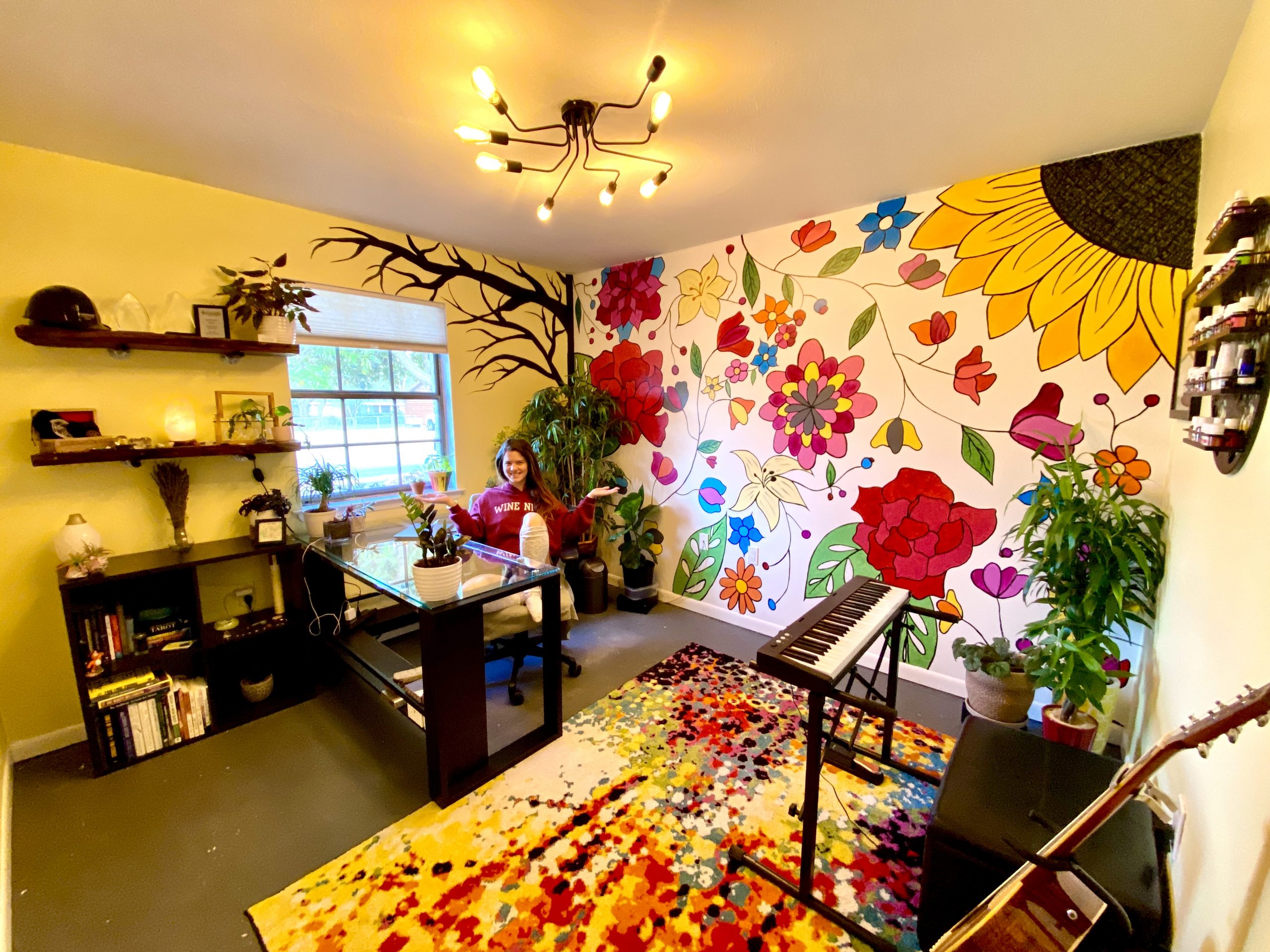
Have you ever heard of Biophilic Design?
I first learned about Biophilic Design while helping film for Bloomtv
The term “Biophilia” is derived from the Greek words for “life” and “love or affection;” making its literal translation “love of life.”
Biophilic Design utilizes natural materials, patterns, and phenomena to maintain a connection to nature within the built environment… so you’re pretty much creating a personalized ecosystem!
But Biophilia is more than just a philosophy—biophilic design has been found to:
SUPPORT COGNITIVE FUNCTION,
SUPPORT PHYSICAL HEALTH, and
SUPPORT PSYCHOLOGICAL WELL-BEING.
Since the average American spends 90 percent of their life indoors, increasing biophilia in our environments (especially work environments) would have significant results– Give it a shot!
Again, you don’t have to start from scratch to start making a difference– you can take baby steps at a time!
